Share
Save
Ready
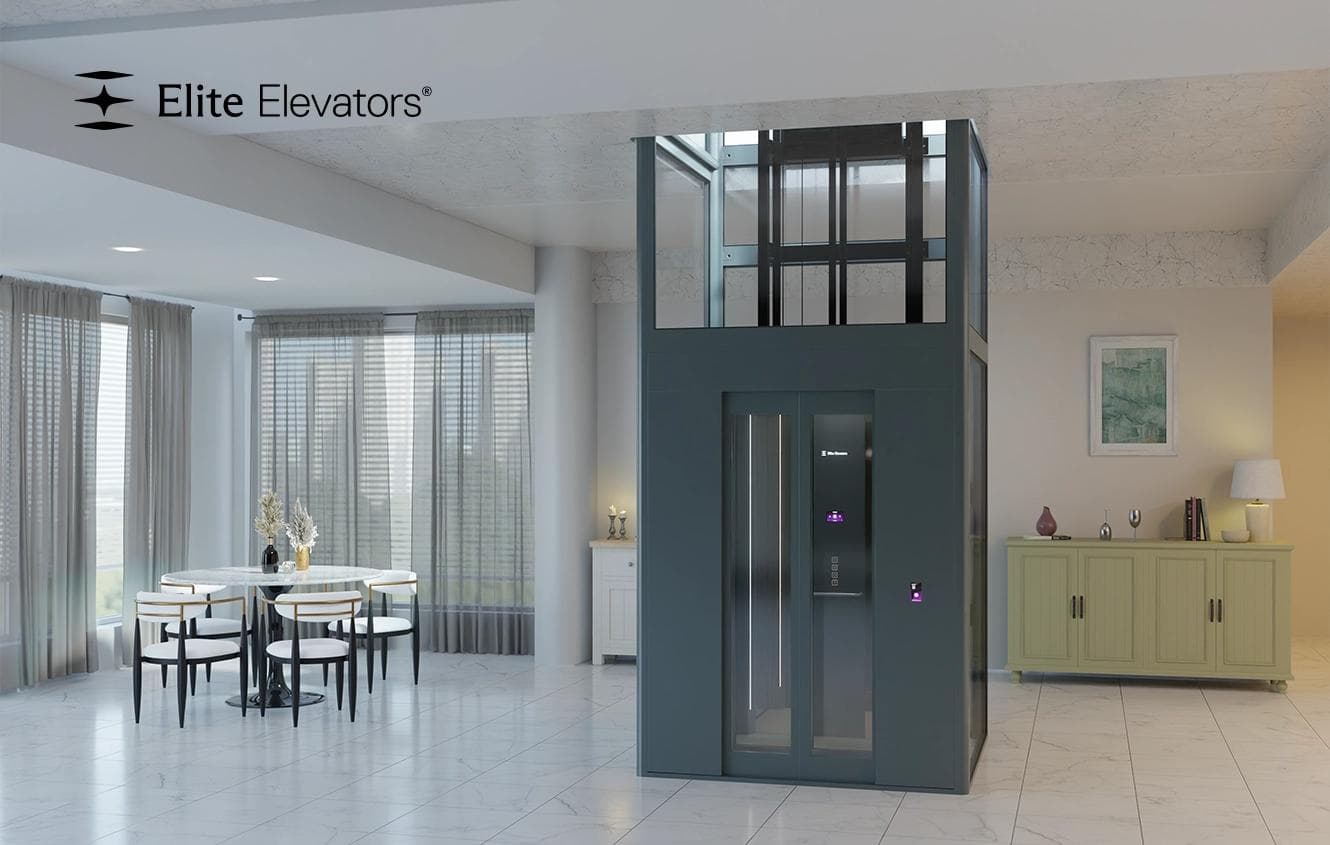
Installing a home elevator during construction is 15–25% cheaper than retrofitting because shaft dimensions are planned in advance, civil work is integrated, and no existing structure needs modification. Elite Elevators recommends involving their engineers at the blueprint stage for optimal placement and cost efficiency.
You're building a new home. The architect has presented the floor plans. The contractor has started work. And somewhere in the conversation, the idea of a home elevator has come up — possibly from a family member, possibly from the architect, possibly from you. The immediate response from most people at this stage is: "We'll add it later."
Later rarely works out as expected. Later means a fully finished home being partially dismantled. Later means coordinating a second contractor alongside your household routine. Later means paying more — sometimes significantly more — for an outcome that could have been achieved at a fraction of the cost and disruption during the original construction.
The comparison between lift installation during construction vs retrofitting is not simply about preference. It is about money, time, disruption, and the quality of the final result. This guide gives you the honest numbers and the practical framework to make the right decision — before it's too late to make the better choice.
At the technical level, the difference is straightforward — but its implications are significant.
Installation during construction means the elevator shaft, pit, and electrical infrastructure are built into the home as part of the original construction programme. The shaft is integrated into the building's structure, the pit is excavated as part of the foundation work, the electrical connection is run during the wiring phase, and the lift installation follows the building's completion in a coordinated, planned sequence.
Retrofit installation means adding an elevator to a completed home. The shaft must be created by opening existing floors. The pit must be excavated through finished flooring and potentially through existing plumbing and foundation elements. The electrical connection must be run through completed walls and ceilings. And in some cases, a structural engineer must assess whether the planned position is feasible without compromising load-bearing elements.
Both approaches are entirely achievable — Elite Elevators completes hundreds of retrofit installations every year across India. But the planning, cost, and disruption profiles are materially different.
Understanding who should prioritise construction-stage planning helps clarify whether this decision applies to your situation.
Homeowners currently in the construction phase — particularly those building G+2 or G+3 homes in Chennai's ECR corridor, Bangalore's Sarjapur Road, Hyderabad's Jubilee Hills, or any other multi-floor residential market — are in the optimal window for construction-stage planning. The cost advantage is available now and disappears the moment construction is completed.
Architects and structural engineers specifying homes for clients — particularly luxury residential projects where an elevator is expected — benefit significantly from early involvement with Elite Elevators' team. Shaft positioning, structural load considerations, and pit dimensions can be integrated into the drawings rather than resolved as construction problems later.
NRI homeowners funding construction remotely — building or renovating Indian properties while living abroad — benefit from construction-stage planning because it eliminates the need for a second major construction event. The elevator is installed once, on the planned timeline, without requiring the NRI's physical presence to manage a disruptive retrofit.
Families with elderly members who know the elevator will be needed — even if not immediately — make a clear financial decision by building it in during construction. The cost saving is real. The disruption saving is also real. And the lift is available from day one of occupation, rather than after a retrofit process that the elderly family member must live through.
Shaft positioning during construction is a design decision with long-term implications for both functionality and aesthetics. The wrong position creates usability friction. The right position makes the elevator a natural, integrated part of the home.
Adjacent to the staircase — the most architecturally natural position. The elevator and staircase create a vertical circulation core, and the design logic of their co-location is immediately intuitive to all users. From a structural perspective, the staircase void can often be extended or repositioned to accommodate the elevator shaft without major redesign.
In a dedicated corner of each floor — for homes where staircase adjacency is not feasible, a dedicated corner position on each floor is the next best option. The key requirement is vertical alignment — the shaft position on each floor must align exactly. This is straightforward to plan during design and becomes expensive to achieve in a completed building.
As a central feature — in architecturally ambitious homes, the elevator can be positioned as a visual centrepiece — visible from the living area through glass walls or the X shaft structure, creating a dynamic architectural element. This positioning requires construction-stage planning to integrate the glass shaft structure with the surrounding design language.
Outdoor X shaft position — Elite Elevators' glass-panelled X shaft is a ready-to-install shaft structure that can be added externally to a completed building without touching the internal structure. This is the closest thing to a "construction vs retrofit" bridge — it provides a clean retrofit solution without opening existing floors, though it requires external wall access and is best planned during construction for optimal aesthetic integration.
Safety features like ARD, door sensors, and overspeed governors drift out of spec without regular servicing. Elite Elevators' Chennai AMC team tests every system hands-on — so your family is protected every single day, not just on installation day.
The retrofit elevator cost India premium over construction-stage installation comes from several distinct sources.
Floor opening creation — in a completed home, creating the shaft opening on each floor requires breaking through finished flooring, the structural slab, and in some cases, finished ceiling elements on the floor below. This is skilled civil work that takes time, creates significant dust and debris, and must be managed carefully to avoid damaging finished surfaces. During construction, the slab opening is simply left during the pour — a minimal incremental cost.
Pit excavation through finished flooring — even at 59–120mm depth, excavating the elevator pit through a completed and finished floor (tiles, screed, potentially plumbing below) is significantly more complex than excavating during the foundation phase when the area is open ground.
Electrical routing through completed walls — running the dedicated electrical circuit through finished walls and ceilings requires chasing (cutting channels in plasterwork), which creates dust, requires finishing (plastering, painting), and adds time. During construction, the cable run is simply included in the electrical programme with no additional work.
Structural assessment cost — in some retrofit scenarios, a structural engineer must assess whether the planned shaft position is feasible without affecting load-bearing elements. This assessment is an additional cost that does not arise in construction-stage planning.
Finishing and reinstatement — after a retrofit installation, the disturbed flooring, wall surfaces, and ceilings must be reinstated to match the existing finish. In a high-quality interior, this reinstatement can be costly — particularly for natural stone flooring or premium wall finishes.
Collectively, these additional costs typically add 15–25% to the total elevator installation cost in a retrofit scenario compared to construction-stage installation. For a model like the X300 MK II at ₹22.70 lakhs (G+3), this represents a retrofit premium of ₹3.4 to ₹5.7 lakhs — money that could have been eliminated entirely with construction-stage planning.
The X300 MK II and X300 MK II Plus are the strongest new construction choices. With only a 59mm pit depth requirement, these models impose minimal structural requirements on the building design. The gearless belt drive covers up to G+5, making them appropriate for ambitious multi-floor homes. The Xshaft glass structure integrates elegantly with modern architectural design languages.
The E300 Cogbelt is the premium new construction choice — particularly for luxury villa projects where European engineering credentials and the Elegance cabin collection are expected. The E300's structural requirements are best addressed during construction when shaft dimensions and support elements can be precisely specified.
For retrofit — recommended models:
The X300 MK II with its 59mm pit depth is the easiest retrofit in Elite Elevators' range. The minimal pit excavation, no machine room, and modular Xshaft option make it the least disruptive retrofit option for most Indian homes.
The X200 at 100mm pit depth is also a strong retrofit option — particularly for budget-focused families retrofitting G+1 to G+3 homes. The hydraulic system's simpler civil requirements and the compact cabin footprint make it manageable in most Indian home configurations.
The Xshaft option for both: The glass-panelled Xshaft structure is available with the X300 series and is valuable in both scenarios — during construction as an architectural feature, and during retrofit as a way to add the elevator externally without opening internal floors.
The earlier Elite Elevators' engineers are involved in your construction project, the better the outcome — for cost, design integration, and installation efficiency.
At the blueprint stage: Elite Elevators' engineers review your floor plans, recommend the optimal shaft position, specify pit dimensions and structural requirements, and provide the civil preparation drawings your contractor needs. This involvement costs nothing and saves significantly.
During construction: As the building reaches the foundation and slab stages, Elite Elevators' team coordinates with your contractor to ensure pit preparation and slab openings are executed correctly. Electrical rough-in can be completed during the wiring phase.
At building completion: With all civil preparation complete, the lift installation follows in 2–3 weeks — a clean, focused installation in a building that was designed to receive it.
Contact Elite Elevators' team at the enquiry stage of your project — not at the completion stage. The difference in outcome is significant.
The best time to plan a home elevator is during construction. The second-best time is now. Either way, Elite Elevators' team is ready to help — with a site assessment, blueprint review, or construction coordination consultation.
If you can't remember — it's overdue. Protect your Elite Elevator, your family, and your warranty with a simple annual plan.
Construction-stage installation is 15–25% cheaper than retrofitting. The savings come from eliminating floor opening work, pit excavation through finished surfaces, electrical re-routing, and post-installation reinstatement costs. For a G+3 X300 MK II, this represents a saving of ₹3–6 lakhs.
Yes. Elite Elevators completes hundreds of retrofit installations annually. With pit depths as shallow as 59mm, no machine room, and the Xshaft external option, most completed Indian homes can accommodate a retrofit elevator with manageable civil work.
The X300 MK II (₹22.70L for G+3) or X300 MK II Plus (₹24.95L for G+3) are the strongest new construction choices — combining minimal structural requirements (59mm pit), G+5 floor coverage, and the most advanced feature set available in the mid-range segment.
At the blueprint stage — before foundation work begins. Elite Elevators' engineers can review your floor plans, recommend shaft positioning, and provide civil preparation drawings at no cost. Early involvement eliminates retrofit costs and ensures the elevator integrates naturally into the design.
Yes. Elite Elevators' CRM and engineering teams coordinate directly with architects and contractors. Multiple customer reviews specifically cite this coordination — with Elite Elevators' team working alongside architects to align elevator specifications with the building's design requirements.
Riyash is a Home Mobility Consultant and Technical Writer at Elite Elevators, India's leading provider of premium residential elevator solutions. With hands-on experience in elevator installation planning, safety compliance, and residential infrastructure across Indian cities, Riyash helps homeowners navigate the technical and practical aspects of choosing the right home lift. His articles focus on hydraulic elevator technology, accessibility design, installation best practices, and smart vertical mobility trends shaping modern Indian homes. Riyash is committed to helping families make confident, well-informed elevator decisions for their homes.



